
In a world where borders are increasingly blurred and challenges transcend national frontiers, the importance of understanding global law has never been more critical. Legal professionals are confronted with complex, interconnected issues that demand a truly global mindset.
The Rise of Transnational Legal Issues
Climate change, human rights, trade, and digital privacy no longer stay confined within national boundaries. For example, the EU’s General Data Protection Regulation (GDPR) affects not only European businesses but also multinational technology giants operating worldwide (Regulation (EU) 2016/679). Similarly, human rights frameworks were once the domain of international courts. Now they influence domestic policies across jurisdictions. This shift is seen in cases like Kadi I and II (C-402/05 and C-415/05) about the supremacy of EU law over international obligations.
Navigating these complexities requires more than a thorough understanding of a single legal system. It demands an appreciation of how international treaties, customary international law, and regional agreements intersect with domestic legislation.
Why It Matters for Tomorrow’s Lawyers
Future lawyers must develop skills that transcend traditional legal boundaries. Whether working at a law firm, an NGO, or within government institutions, professionals increasingly face legal issues shaped by both domestic and international frameworks.
For instance, cases involving refugees seeking asylum may need applying the 1951 Refugee Convention (UN General Assembly, 1951) alongside national immigration laws. Environmental lawyers often grapple with international climate agreements, like the Paris Agreement (UNFCCC, 2015), while advising on local compliance requirements.
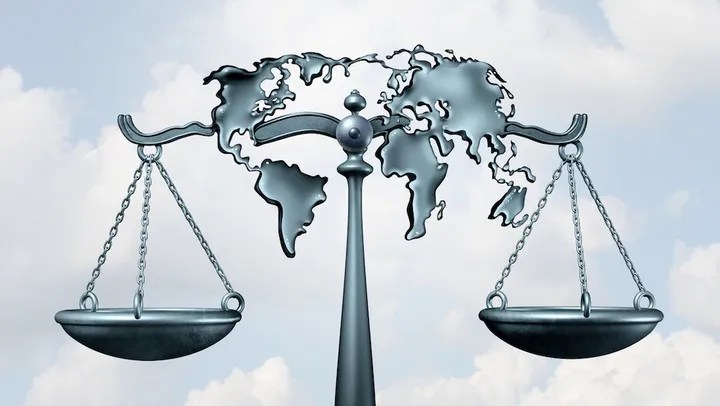
Building a Global Legal Mindset
Understanding Global Law is not merely about memorizing treaties or grasping EU Directives. It is about cultivating critical thinking skills to analyze complex, cross-border legal problems. It entails understanding how national courts engage with international obligations and how international law influences domestic policy debates.
This mindset is essential not only for those working in international organizations but for all legal professionals seeking to stay adaptable and forward-thinking in a rapidly evolving world.
The challenges of the 21st century—from climate change to digital privacy—demand legal minds capable of thinking beyond borders. Embracing Global Law is not just a matter of academic study; it is an essential step toward developing the analytical skills and perspectives necessary to make a meaningful impact in the legal landscape.

Leave a comment