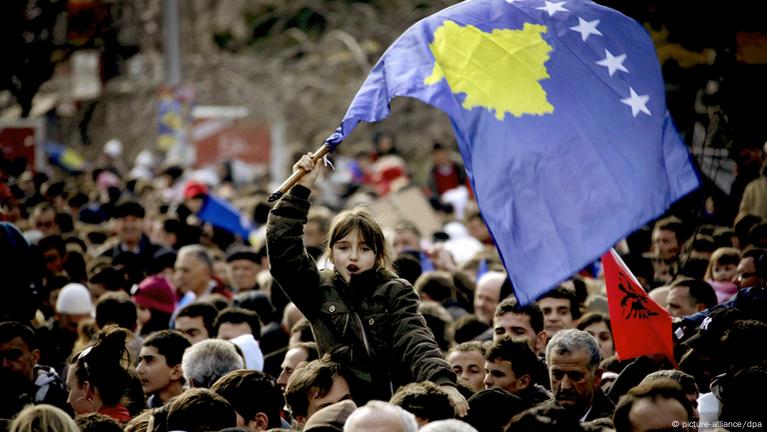
Kosovo’s journey to statehood is one of the most closely watched and contested developments in modern international law and politics. Situated in the heart of the Balkans, Kosovo declared independence from Serbia in 2008, marking a critical juncture in its quest for self-determination. But what makes Kosovo’s story so complex? How does it fit into the broader legal and political frameworks that define what a “state” is in international law?
1. Historical Background
Kosovo’s modern journey begins in the aftermath of the disintegration of the former Yugoslavia. As Yugoslavia fractured in the 1990s, tensions between Kosovo’s ethnic Albanian majority and the Serb-dominated Yugoslav authorities intensified. The situation escalated into the Kosovo War (1998–1999), leading to a NATO military intervention and the establishment of the United Nations Interim Administration Mission in Kosovo (UNMIK), under UN Security Council Resolution 1244 (1999).
During this period, Kosovo was administered as an international protectorate—nominally part of Serbia but effectively governed by the UN. This unique status laid the groundwork for Kosovo’s later declaration of independence.
2. The Declaration of Independence (2008)
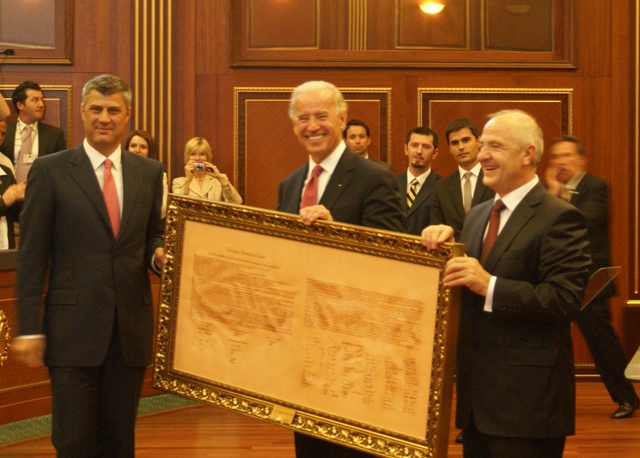
On 17 February 2008, the Assembly of Kosovo declared independence from Serbia, asserting that Kosovo was now a sovereign and independent state. The move was controversial. Many Western states, including the United States and a majority of European Union members, recognized Kosovo’s independence. However, Serbia and key international actors like Russia and China rejected it. They argued that it violated Serbia’s territorial integrity.
3. The Legal Status of Kosovo
Kosovo’s claim to statehood has tested the traditional criteria for statehood set out in the Montevideo Convention (1933):
✅ A permanent population
✅ A defined territory
✅ A government
✅ The capacity to enter into relations with other states
On the surface, Kosovo meets these criteria. However, international recognition remains contested. As of 2025, Kosovo is recognized by over 100 UN member states but is not a member of the United Nations due to objections from states like Russia and China, who have veto power in the Security Council.
The International Court of Justice (ICJ) addressed part of this legal puzzle in its 2010 Advisory Opinion, concluding that Kosovo’s declaration of independence did not violate international law. However, the ICJ did not go so far as to affirm Kosovo’s statehood or grant it automatic membership in the international community, leaving its status to be determined by state practice and political realities.
4. International Recognition and Challenges
Kosovo’s path to full international recognition has been incremental and uneven. While it has established diplomatic relations with numerous countries, others remain hesitant to recognize it due to concerns about precedents for separatist movements (e.g., Spain’s position given Catalonia) and the principles of territorial integrity.
Kosovo has sought membership in international organizations like UNESCO and Interpol but has faced resistance, particularly from states sympathetic to Serbia’s position. Domestically, Kosovo continues to build its institutions and align itself with international norms, including human rights and rule of law frameworks, although challenges remain in areas like governance, minority rights, and economic development.
5. Broader Implications
Kosovo’s case has become a touchstone for debates on self-determination, sovereignty, and the international community’s role in state-building. It highlights the tension between the right of peoples to self-determination and the principle of territorial integrity. These are two pillars of international law that can sometimes pull in opposite directions.
Many states and international institutions’ cautious approach reflects concerns about creating precedents that might encourage other separatist movements. At the same time, Kosovo’s experience shows how international law often defers to political realities, with recognition hinged as much on diplomatic relations and geopolitical considerations as on legal doctrine.
Kosovo’s journey to statehood underscores the resilience of a people seeking to define their own future within the framework of international law. At Legally Curious, we see Kosovo’s experience as a powerful example of how legal principles, diplomacy, and international cooperation can together help navigate the complex path toward full international recognition. Despite the challenges, Kosovo’s progress shows that with determination, dialogue, and commitment to global norms, there is a promising path ahead for new states to emerge and take their place on the world stage. Kosovo’s story reminds us that international law is not just about rules—it’s also about people’s aspirations and the hope that through legal avenues, new states can secure their rightful place in the community of nations.

Leave a comment