By Rron Bogaj | Legally Curious
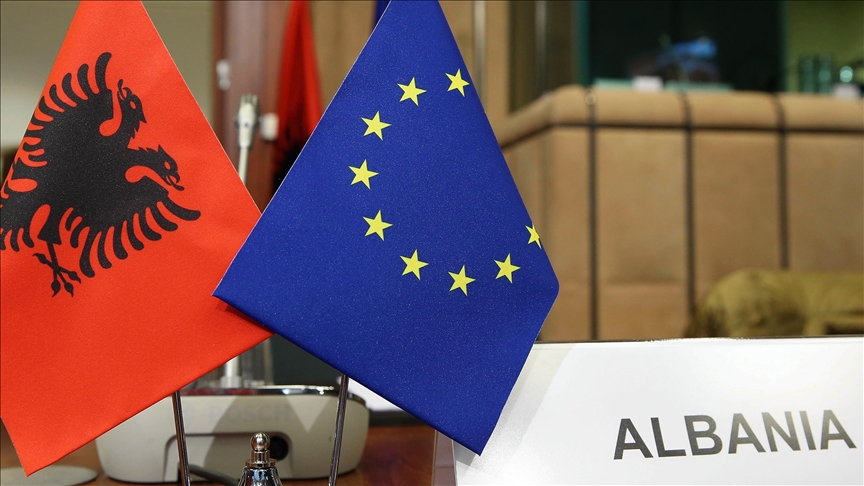
As the European Union cautiously reopens its doors to enlargement, Albania is charging ahead with a bold goal: EU membership by 2030. Prime Minister Edi Rama has laid out a detailed roadmap — concluding negotiations by 2027 and securing accession within three years. This target, once deemed overly ambitious, is now gaining traction in both Tirana and Brussels.
But can ambition alone carry Albania across the finish line? And what will it take to ensure that 2030 is more than just a symbolic horizon?
A Political Mandate for Europe
Following Albania’s 2025 national elections, Prime Minister Rama’s Socialist Party retained its parliamentary majority, reaffirming the government’s pro-European direction. Despite concerns about electoral fairness, the outcome solidified political stability, a prerequisite for serious EU engagement.
Public support remains strong. The diaspora’s involvement — with nearly 195,000 voters participating — signals a broader societal investment in Albania’s European future.
Legal Reforms and Institutional Progress
Negotiations have picked up pace. Since the opening of accession talks in 2022, Albania has made tangible progress:
- Cluster 1 (Fundamentals) opened in late 2024
- Cluster 6 (External Relations) followed in December
- Cluster 2 (Internal Market) and Cluster 3 (Competitiveness) were opened in early 2025
With 24 of 33 chapters now in play, Albania has overtaken Serbia in negotiation breadth. Still, not a single chapter has been closed, underscoring the complexity of aligning national institutions with EU standards — especially in areas like judicial independence, public procurement, and anti-corruption enforcement.
Brussels: Encouragement with Caution
Albania’s efforts have not gone unnoticed. European Council President António Costa recently stated that membership could be achieved before 2030, praising Albania’s reform momentum. Enlargement Commissioner Marta Kos described the country as a “champion” of regional cooperation and legal harmonization.
Moreover, Albania is fully aligned with EU foreign policy, including sanctions on Russia. This strategic consistency sets it apart in the Western Balkans and makes it a reliable partner in Brussels’ eyes.
Geopolitics: A Strategic Opening
Albania hosted the 6th European Political Community Summit in May 2025, a symbolic recognition of its growing role in continental diplomacy. Topics ranged from security cooperation to mobility and digital integration — fields where Albania is increasingly seen not as a peripheral state, but as a contributor to the EU’s future fabric.
The Western Balkans Quad initiative — comprising Albania, Kosovo, North Macedonia, and Montenegro — further reinforces regional unity under the European banner.
Challenges on the Road Ahead
Yet the path is far from smooth. Albania still struggles with:
- Rule of law enforcement, especially consistent application of judicial vetting
- Corruption at high levels, with concerns about impunity and politicized prosecutions
- Media freedom, with recent restrictions — such as the TikTok ban — raising alarms
- Public trust, as allegations of state resource misuse during elections cast shadows over reform legitimacy
Critics, including some former EU negotiators, have called the 2030 goal “delusional.” But such skepticism often overlooks both the pace of current progress and the shifting political calculus in Brussels.
Conclusion: Albania’s EU Future is Earned, Not Given
2030 is not a deadline imposed by the EU — it is a vision declared by Albanians. That distinction matters.
It reflects a belief that Albania is not waiting for history to happen; it is making itself ready to shape Europe’s future. The country’s strategic choices, institutional sacrifices, and diplomatic outreach are all part of a broader identity shift: from candidate to contributor.
If Albania sustains its momentum — not just in negotiating chapters, but in transforming public institutions and upholding democratic values — the 2030 vision is not only realistic. It’s attainable.
Europe needs Albania — not just as a member, but as a reminder of why the EU matters in the first place.
A union of peace, purpose, and progress is only as strong as those willing to work for it. Albania, now more than ever, is doing just that.

Leave a comment