Background
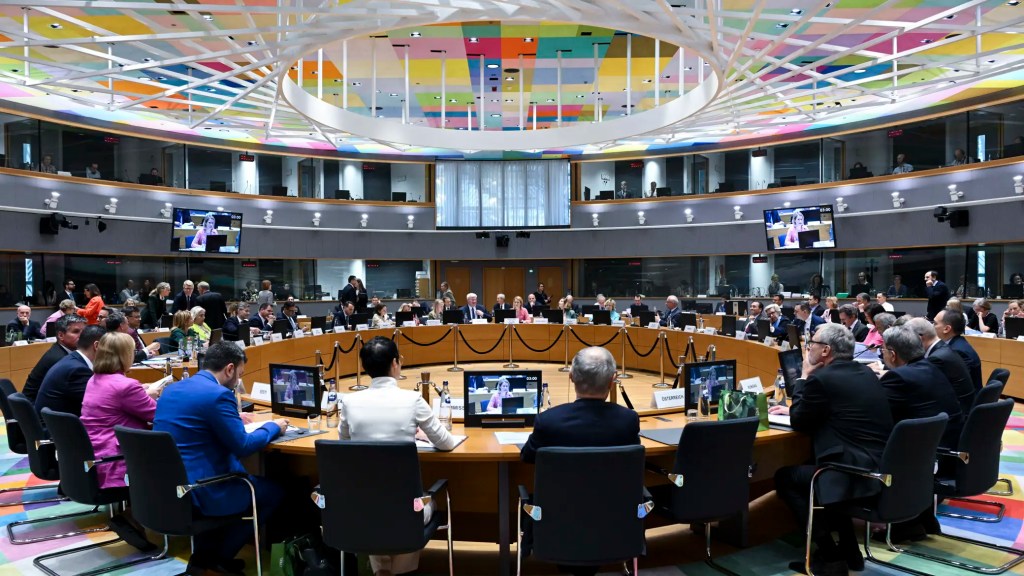
On 23 June 2025, EU Foreign Ministers met in Brussels to discuss mounting evidence of civilian harm and potential human-rights breaches by Israeli forces in Gaza. A confidential European External Action Service (EEAS) report—leaked ahead of publication—found “indications of disproportionate use of force” and significant restrictions on humanitarian access, possibly violating Article 2 of the EU–Israel Association Agreement.
Key Findings of the EEAS Report
- Disproportionate force: Civilian casualties soared after the latest incursions, with UN OCHA estimating over 1,200 non-combatant deaths in May–June alone.
- Humanitarian impediments: Israeli checkpoints and closures delayed or blocked UN and Red Cross convoys, exacerbating shortages of food, water and medicine.
- Potential breaches: By curtailing freedom of movement and failing to distinguish combatants from civilians, Israel may have breached Article 2’s obligations.
- Recommendations: The EEAS urged the Council to initiate a formal dialogue with Israel, consider targeted suspension of trade preferences, and review ongoing arms-export licences.
Member State Positions
Pro-Suspension Coalition (Spain, Belgium, Ireland, Sweden):
These states—joined by the Netherlands and Denmark—pushed for an immediate suspension of the Association Agreement’s trade and research chapters and a temporary embargo on military exports until Israel allowed unfettered humanitarian access and complied with International Humanitarian Law.
Cautious Majority (Germany, France, Italy):
While acknowledging serious concerns, Germany, France and Italy resisted punitive measures. They stressed ongoing bilateral security cooperation, the importance of Israeli stability for Mediterranean security, and Germany’s historical responsibility towards Israel. They instead favoured “enhanced political dialogue” and a formal warning under Article 2.
Hardliners (Hungary, Poland, Czech Republic):
Opposing even a formal Article 2 dialogue, these countries argued that punitive steps would undermine EU unity and distract from broader efforts—such as planned truce talks—to de-escalate the conflict.
Legal and Institutional Dynamics
- Article 2 EU–Israel Association Agreement: Provides that “relations between the Parties shall be based on respect for human rights and democratic principles,” offering a legal basis for conditionality.
- Council Decision-Making: Any suspension of trade or cooperation measures requires unanimity in the Foreign Affairs Council, granting each Member State veto power over binding measures.
- Role of the European Parliament: On 25 June 2025, the Parliament adopted a non-binding resolution calling for humanitarian corridors and a parliamentary monitoring mission to Gaza.
- Complementary Mechanisms: The EU could also invoke Article 7 TEU (“serious breach” of EU values) or pursue targeted human-rights sanctions under the Global Human Rights Sanctions Regime (the European “Magnitsky” framework).
Wider Political Context
Beyond legal steps, the debate exposed deeper divisions over EU strategic autonomy. Eastern member states, relying on NATO, were less inclined to challenge Israel, while Western states—facing domestic pressure from civil-society groups and younger voters—pushed for a stronger human-rights stance. Meanwhile, the United States signalled “serious concerns” but stopped short of supporting EU suspension.
Next Steps
The Foreign Affairs Council will reconvene in early July, with High Representative Borrell tasked to report on progress in the Article 2 dialogue. If consensus remains out of reach, individual Member States may launch national measures (e.g., export-licence reviews) or pursue coordinated action in the UN Human Rights Council.
Conclusion
The EU’s fractured response highlights the tension between upholding human-rights commitments and maintaining strategic partnerships. While the EEAS report provides a clear legal pathway to conditionality, political unity is elusive. As we head into the European Council in July, the question remains whether the bloc can translate legal obligations into concrete measures—or whether geopolitical and historical ties will continue to prevail.


Leave a comment