Introduction
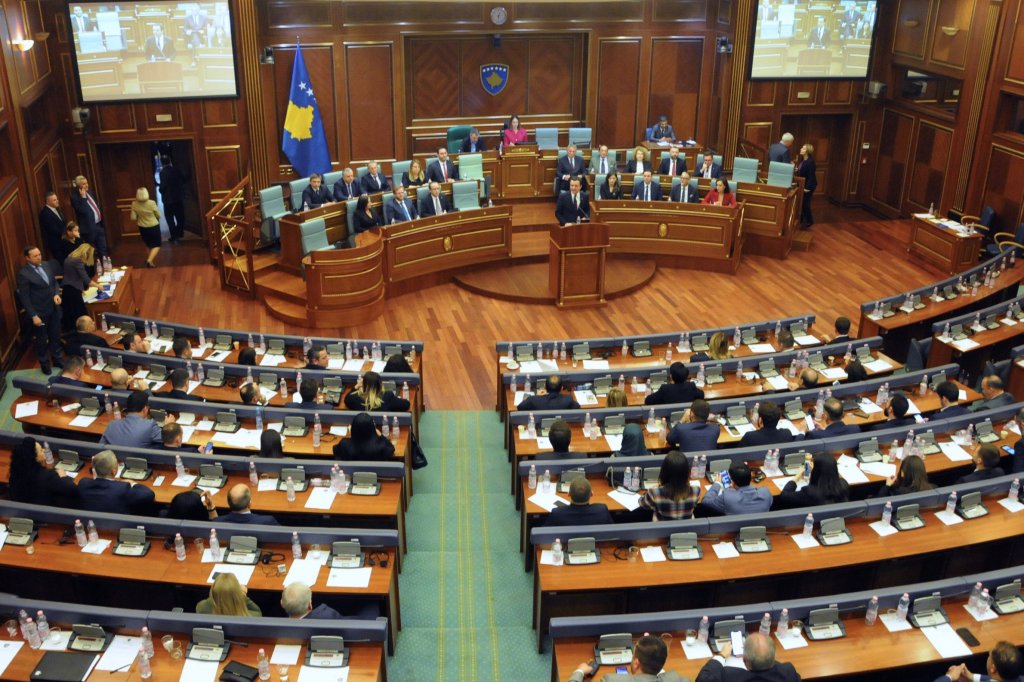
Since the parliamentary elections on February 9, 2025, Kosovo has been ensnared in a political deadlock, with lawmakers failing to elect a new speaker—a prerequisite for forming a government. This stalemate has persisted for over four months, raising significant concerns about the nation’s democratic processes and governance.
The Electoral Outcome
In the 2025 elections, Prime Minister Albin Kurti’s party, Vetëvendosje (Self-Determination Movement), secured 48 out of 120 seats, falling short of the 61 needed for a majority. Despite this, Kurti nominated Albulena Haxhiu, the outgoing justice minister, for the position of parliamentary speaker. However, opposition parties have consistently rejected her candidacy, leading to a protracted deadlock.
Constitutional Implications
Kosovo’s Constitution mandates that the Assembly elect a speaker within 30 days of its inaugural session. Failure to do so has led to a series of delays and cancellations, with the Assembly reconvening multiple times without success. The Constitutional Court has intervened, urging lawmakers to resolve the deadlock within a specified timeframe.
Political Dynamics
The opposition parties—Democratic Party of Kosovo (PDK), Democratic League of Kosovo (LDK), and Alliance for Kosovo’s Future (AAK)—have refused to form a coalition with Vetëvendosje, citing ideological differences and disagreements over governance approaches. Kurti’s refusal to nominate an alternative candidate for speaker has further entrenched the impasse.
Societal Impact
The ongoing political paralysis has profound implications for Kosovo’s citizens. Without a functioning government, essential services are at risk, and economic reforms are stalled. Additionally, the deadlock hampers progress in the EU-mediated normalization talks with Serbia, a critical aspect of Kosovo’s foreign policy.
International Repercussions
The European Union and other international partners have expressed concern over Kosovo’s political instability. Prolonged deadlock threatens to jeopardize significant international funding, including loans and grants from the EU and World Bank, which are vital for sectors such as health, education, and infrastructure.
Conclusion
Kosovo stands at a crossroads. The current parliamentary gridlock not only undermines the nation’s democratic institutions but also delays much-needed reforms and international cooperation. It is imperative for Kosovo’s political leaders to prioritize national interests over partisan divisions to restore functionality to the government and uphold the principles enshrined in the Constitution.

Leave a comment