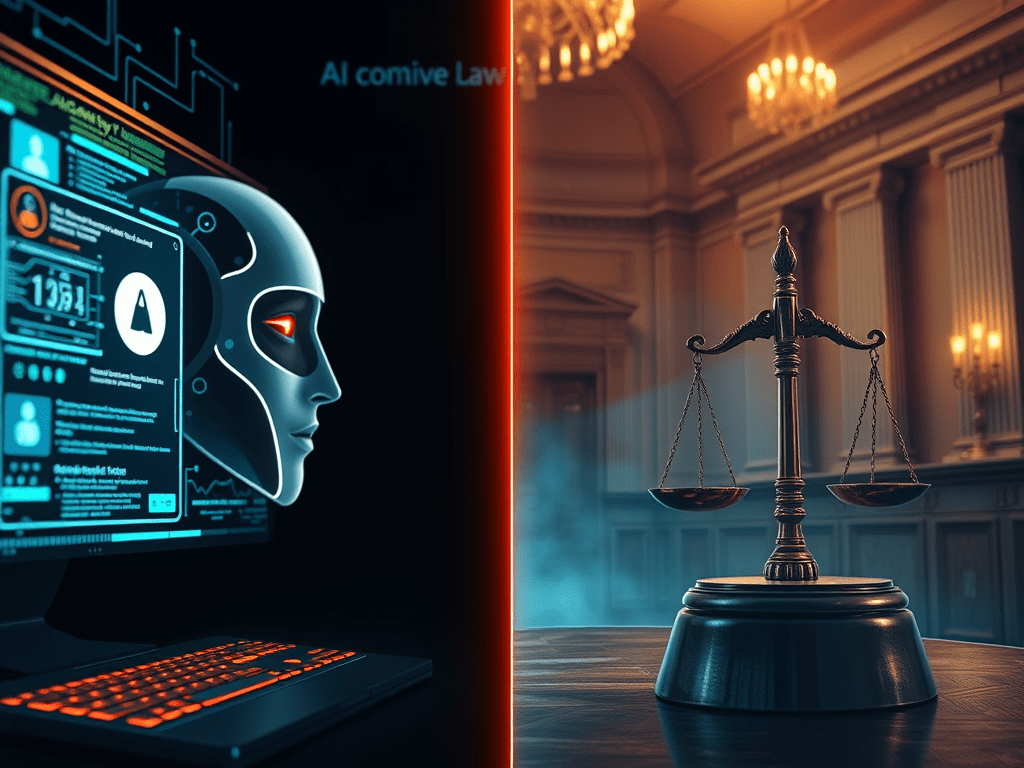
Artificial intelligence is no longer a lab experiment—it drafts contracts, screens candidates, and helps make decisions that change lives. When it errs, who pays?
AI is marketed as “smart,” but it is far from infallible. When an algorithm discriminates, a chatbot gives dangerous advice, or a self-driving system causes a crash, the legal question becomes urgent: who should be held responsible? Our doctrines were built for human agency, not machine autonomy, yet we increasingly delegate decisions to non-human systems.
The Current Legal Vacuum
Today, most jurisdictions stretch old rules to fit new harms. Regulation can determine how AI is built and deployed, but liability decides who pays when things go wrong. Traditional categories—negligence, product liability, breach of contract—presume a clear actor and a clean causal chain. With AI, that chain fractures:
- Developers design and train the model;
- Companies integrate and deploy it;
- Users rely on its outputs;
- The system itself generates the harmful result.
When blame is shareable by all, it risks being absorbed by none.
Corporate Accountability vs. Individual Negligence
One position is straightforward: treat AI like a product and apply strict liability to makers and deployers. If an autonomous system malfunctions, manufacturers pay—period. This forces robust testing and safer design.
But not every harm is a “defect.” Sometimes it’s misuse or professional negligence. If a lawyer relies on a generative model for citations and submits fabricated cases, is the vendor liable for hallucinations, or the lawyer for breaching professional standards? In hiring, if an employer adopts a biased screening tool, do we fault the software provider for embedding bias, the employer for failing to audit, or both?
The Temptation—and Trap—of “AI Personhood”
Some propose granting advanced AI a form of legal personhood, akin to corporations. The analogy is seductive but shaky. Corporations are run by humans with traceable intent, governance, and assets. AI systems lack intention, conscience, or independent resources. Suing a model that cannot pay—or punish—turns accountability into theater and risks letting real decision-makers hide behind a legal fiction.
The Responsibility Gap
If the law fails to assign responsibility clearly, we create a responsibility gap where harm is real but accountability evaporates.
Consider the stakes: a misdiagnosis by an AI medical tool; a wrongful arrest from faulty facial recognition; an autonomous drone making a lethal error. These are not hypotheticals. Without clear liability, victims face vendors that disclaim responsibility, deployers that plead complexity, and machines that cannot be punished.
Toward a Forward-Looking Liability Framework
-
Tiered Strict Liability.
Impose strict liability on developers and deployers for harms caused by high-risk use cases (healthcare, employment, credit, policing, critical infrastructure). For lower-risk domains, default to negligence with heightened duties to monitor and log. -
Mandatory Insurance.
Require insurers (or compensation funds) for AI deployments, similar to motor vehicle insurance, ensuring victims are compensated without litigating the entire causal chain. -
Auditability & Evidence Duties.
Compel robust logging, dataset provenance, and model documentation. Lack of audit trails should trigger adverse inferences or fee shifting—black boxes don’t get the benefit of the doubt. -
Shared Liability by Role.
Allocate responsibility across the lifecycle: developers (design/training choices), deployers (context, integration, oversight), and professional users (standards of care). Contract terms can apportion risk but not erase duties owed to third parties. -
Human-in-the-Loop Requirements.
For consequential decisions (hiring, lending, medical triage), mandate meaningful human review. “Rubber-stamping” an algorithm should not shield anyone from liability.
Critical Reflection
AI exposes a weakness in our legal imagination. We either stretch human-centric doctrines until they snap or flirt with granting machines a legal status they cannot meaningfully occupy. What we need instead is candid recognition that new forms of agency demand new forms of accountability. Law cannot lag as a passive spectator to technological power.
🔎 Legally Curious Breakdown
What’s the core question? When a machine makes a mistake, who pays—the developer, the deployer, the user, or some mix?
What principles should guide us? Victim compensation, deterrence of unsafe design, transparency, and fairness across the AI lifecycle.
What’s the takeaway? Keep accountability human. Use strict liability, insurance, and audit duties to prevent a responsibility gap as AI scales.

Leave a comment