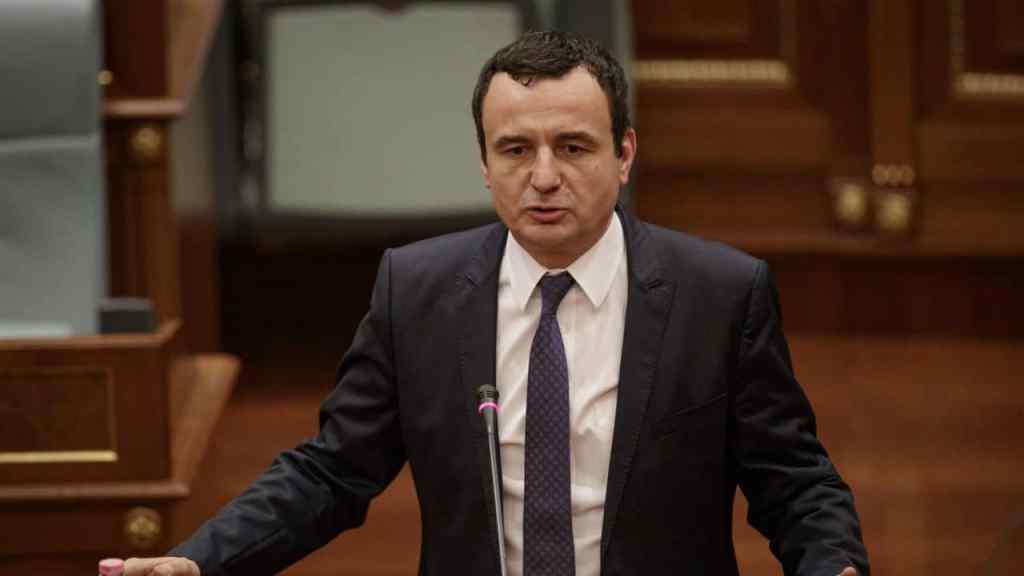
On February 9, 2025, Kosovo voted—and then politics stopped. Since the inaugural session on April 15, the Assembly has repeatedly failed to elect a speaker, a prerequisite for forming a government. By late June, the Constitutional Court took the extraordinary step of ordering lawmakers to end the stalemate within 30 days after dozens of unsuccessful attempts. This is no mere standoff; it is constitutional brinkmanship with real costs for citizens.
The Legal and Moral Quagmire
Kosovo’s constitution envisions an orderly handoff of power: certify results, elect a speaker, nominate a prime minister, form a cabinet. Instead, the winning party—Vetëvendosje (LVV) with 48/120 seats—insists on its speaker nominee, while the opposition refuses, producing a rolling crisis that has seen votes fail again and again. When the guardian of the basic law must remind lawmakers to do their most basic job, legality is being strained by strategy.
This paralysis is not a victimless delay. Without a speaker, the Assembly cannot seat a government. Kosovo drifts under caretakers while strategic portfolios—EU accession, energy transition, investment—idle. It is, plainly, an institutional paralysis at a critical time.
Case Study in Cost: Money Left on the Table
The economic opportunity cost of deadlock is not abstract. Kosovo’s business community has warned that hundreds of millions of euros in EU and international project funding remain effectively stuck behind an unelected speaker’s chair. Infrastructure, environment, and energy programs cannot move without a functioning Assembly to approve appropriations and legal alignments. Uncertainty itself acts like a sanction: firms delay hiring, banks price risk higher, and the best graduates look abroad.
“There are projects and loans worth hundreds of millions waiting to be voted… Businesses are in limbo.”
Scandals and the Erosion of Legitimacy
While institutions stall, Prime Minister Albin Kurti has invited controversy. He refused—twice—to appear for questioning in a probe tied to state reserves, insisting any interview happen in his office. Even if he is not an accused party, the spectacle—a sitting PM defying a summons—feeds a narrative of selective legality.
Separately, opposition parties have filed a wave of lawsuits contesting Kurti’s continued exercise of prime-ministerial authority after resignation formalities, arguing overreach in a caretaker role. Whatever the rulings, the multiplication of legal fronts deepens public cynicism and distracts the government from governance.
Strategy or Paralysis?
Kurti’s defenders frame the standoff as principle: hold the speakership and refuse transactional politics with “the old guard.” But principle without progress becomes performative governance. When a leader’s strategy reduces to testing the Assembly every 48 hours while insisting on an obviously blocked nominee, it looks less like conviction and more like institutional hostage-taking.
International partners have been unusually public: access to EU growth funds and deeper integration depends on one non-negotiable—functioning institutions. The price of domestic brinkmanship is diminishing European leverage.
The Wider Damage
- EU Pathway: Each day without a government blunts credibility in dialogue with Serbia and slows adoption of acquis-aligned reforms.
- Rule-of-Law Branding: Skirmishing with prosecutors over interview logistics may thrill partisans; to investors and diplomats, it signals casualness about institutions.
- Economic Freeze: Uncertainty is itself a tax—on jobs, credit, and long-horizon investments.
What Would Responsible Leadership Look Like?
1) Change the Figure, Keep the Program
Withdraw a blocked speaker candidate and propose a consensus-minded figure with a time-bound reform agenda. That is not capitulation; it is coalition politics in a 120-seat chamber.
2) Publish a 100-Day Legislative Pact
Invite opposition parties to co-sign a short list of non-ideological bills (investment approvals, energy diversification, EU milestones). Force a public choice: govern with me—or explain to voters why not.
3) Respect Institutions—In Full View
Appear when summoned. If there are procedural objections, raise them inside the process, not above it. Kosovo’s brand is rule-of-law; behave accordingly.
4) Signal Fiscal Seriousness
Table a caretaker mini-budget focused on EU-cofinanced projects; commit to transparent pipelines the day a speaker is elected. Investors need dates, not rhetoric.
5) Set a Deadline—Then Escalate Democratically
If no agreement by a fixed date, seek a fresh mandate: allow the president to test an alternative majority or embrace new elections. Endless rollovers are institutional cruelty.
TL;DR
- Deadlock over the speakership has frozen government formation and stalled key funds and reforms.
- Scandals and legal skirmishes erode institutional legitimacy.
- Responsible leadership means compromise, transparent priorities, respect for process, and a willingness to seek a fresh mandate.

Leave a comment