CASE OF THE MONTH · No. 01
You’ve laughed at the woman who “sued McDonald’s for spilling coffee on herself.” Maybe you’ve seen it as a Seinfeld punchline, a meme, or that one example everyone trots out to prove the legal system has gone insane. That’s exactly what McDonald’s wanted you to think. The real story is something else entirely — and once you know it, you’ll never tell the joke the same way again.
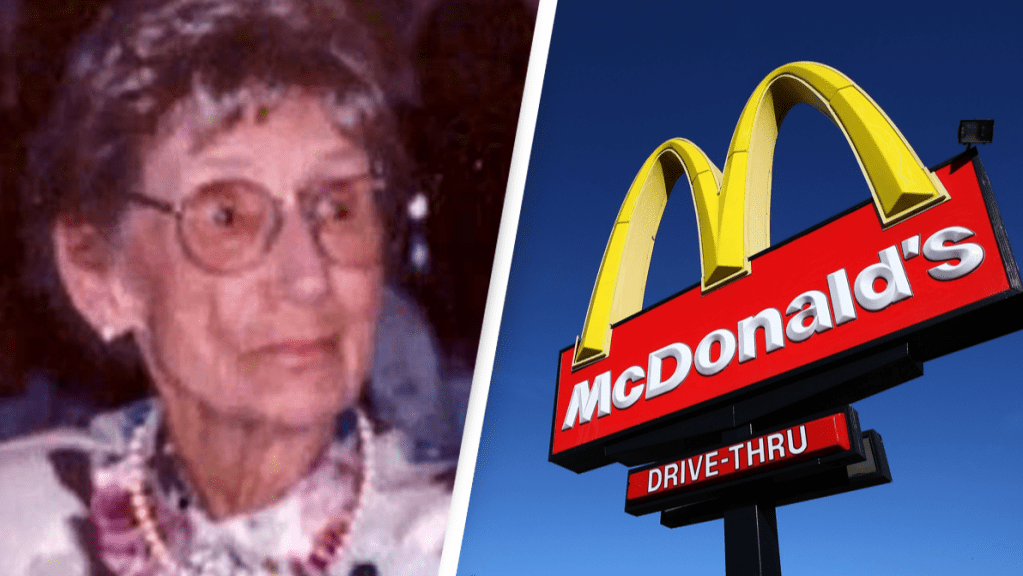
Her name was Stella Liebeck. She was 79 years old. She wasn’t driving. She wasn’t suing for millions just because she could. And she absolutely did not “spill coffee on herself and get rich.”
This is the Liebeck v. McDonald’s Restaurants case as it actually happened. Strap in.
The Myth You’ve Been Fed
For thirty years, this case has been the go-to example whenever someone wants to argue that lawsuits have gotten out of hand. The story, as most people know it, goes something like this:
A clumsy old woman put hot coffee between her legs while driving, spilled it on herself, sued McDonald’s, and walked away with millions. The American legal system is a circus.
Almost every part of that sentence is wrong.
It’s wrong about how it happened. It’s wrong about her injuries. It’s wrong about her demands. It’s wrong about the company. It’s wrong about the verdict. And it’s wrong about how much money she actually received.
The reason you believe the wrong version is not an accident. It’s the result of one of the most successful corporate PR campaigns in modern legal history.
Stella Liebeck Was Not a Caricature
February 27, 1992. Albuquerque, New Mexico. Stella Liebeck — a 79-year-old retired department store clerk — was sitting in the passenger seat of her grandson’s 1989 Ford Probe. They had stopped at a McDonald’s drive-thru. He pulled into a parking spot so she could add cream and sugar to her coffee.
The car was not moving. There were no cup holders. She placed the cup between her knees to steady it and pulled the lid off.
The lid stuck. She tugged. The entire cup tipped into her lap.
And here’s where every version of the story you’ve heard ends. Stupid old lady spills coffee, sues, becomes a meme. Move along.
That’s where the actual story begins.
Wait — What Actually Happened to Her Body
Stella was wearing cotton sweatpants. The coffee soaked into the fabric in seconds and held it against her skin. By the time she could process what was happening, her body was being cooked.
She suffered third-degree burns on six percent of her body and lesser burns on another sixteen percent. Third-degree burns mean the burn went all the way through the skin — destroying the dermis, the nerve endings, the underlying tissue. The burns were on her thighs, her groin, her buttocks, and her genitals.
Look up the medical photos if you have the stomach for it. Most people don’t. The injuries are extreme — the kind of burns you would expect from someone caught in a house fire, not someone who spilled a drink in a parked car.
So how did a cup of coffee do that?
What McDonald’s Knew — and Chose Not to Fix
Here’s where the case stops being about Stella and starts being about a corporation.
McDonald’s served its coffee at 180 to 190 degrees Fahrenheit — roughly 82 to 88 degrees Celsius. For context: coffee brewed at home is typically served at 135 to 140 °F. The difference isn’t a few degrees. It’s the difference between a hot drink and a chemical weapon.
At 190 °F, liquid causes third-degree burns in two to seven seconds. At home temperatures, you’d have time to react and brush it off before serious injury occurred. That’s not a coincidence. It’s physics. McDonald’s wasn’t serving hot coffee. They were serving liquid that was scientifically incompatible with human skin.
And they knew it.
During discovery, McDonald’s was forced to disclose that over 700 people had reported being burned by their coffee in the decade before Stella’s case. Some had third-degree burns. Some required surgery. Some were children. The company had paid out settlements quietly for years.
Their internal quality assurance manager testified — under oath — that McDonald’s knew the coffee was hot enough to cause severe burns. He admitted the company had not warned customers. He was asked whether McDonald’s intended to do anything to lower the temperature. His answer, in court, was effectively: no.
What She Actually Asked For
This is the part of the story that destroys the entire “greedy old lady” narrative. Stella Liebeck didn’t want millions. She didn’t want fame. She didn’t want McDonald’s in the headlines.
She wanted her medical bills covered. Around $20,000.
That’s it. That was her opening request. Her medical expenses plus a bit for lost income while she recovered.
McDonald’s offered her $800.
She tried to settle multiple times. She went to mediation. A mediator recommended McDonald’s settle for $225,000. McDonald’s refused.
So she went to court.
The Trial: Twelve Jurors Who Started Skeptical
Here’s another detail the meme version skips. The jury that heard this case did not walk into the courtroom sympathetic to Stella Liebeck.
Several jurors said afterwards that they thought the case was ridiculous when it began. A coffee spill? Really? They were ready to side with McDonald’s.
Then they saw the evidence. The medical photos. The 700 prior complaints. The quality assurance manager’s testimony. The fact that McDonald’s had refused every reasonable settlement offer. The fact that this 79-year-old woman had been cooked alive in a parked car because a multinational corporation had calculated that her pain was cheaper than reform.
By the end of the trial, the jurors were furious.
The jury awarded Stella $200,000 in compensatory damages for her medical bills, pain, and suffering. That award was reduced to $160,000 because the jury found her 20% responsible for the spill itself.
Then they added $2.7 million in punitive damages. That’s the number that made headlines. That’s the number every meme references.
But here’s what nobody tells you about that $2.7 million figure.
The $2.7 Million Number Was a Message — Not a Payday
Punitive damages aren’t about the victim. They’re about punishment. They exist to make corporations pay enough that they can’t just shrug it off as a cost of doing business.
The jury calculated $2.7 million by taking what they estimated was two days of McDonald’s national coffee revenue. That was the message: change your behaviour, or this is what it will keep costing you.
It was a calculated, deliberate signal. Not a windfall.
And it didn’t even survive the appeal. The judge reduced the punitive damages to $480,000. McDonald’s and Stella eventually settled for an undisclosed amount believed to be less than $600,000. She never received the headline figure. She didn’t become rich. She covered her medical bills, with some left over for the years of recovery she had ahead of her.
How a Real Story Became a National Joke
So how did a case about a woman with third-degree genital burns and a corporation that knowingly endangered customers become the punchline for “frivolous lawsuits”?
Two words: tort reform.
In the 1990s, large corporations and insurance companies poured millions into a coordinated campaign to reform tort law — the area of law that lets injured people sue companies. Their goal was to cap damages, restrict access to courts, and make it harder for ordinary people to win cases against big businesses.
To do that, they needed a villain. They needed an example so absurd-sounding that the public would shake their heads and say yeah, lawsuits have gone too far. So they took the McDonald’s coffee case, stripped it of every meaningful detail, and ran with it.
The ABC News segment never showed the photos. The talk shows never mentioned the 700 prior complaints. The Seinfeld episode never explained the burns. By the time the story reached the public, Stella Liebeck wasn’t a 79-year-old burn survivor. She was a meme.
Why This Case Still Matters
Stella Liebeck died in 2004. She spent the last decade of her life being mocked by people who never saw her medical records.
But Liebeck v. McDonald’s Restaurants didn’t disappear. It became one of the most studied product liability cases in American legal history. It’s taught in law schools as a case study in punitive damages, corporate negligence, and — critically — in how public perception can be engineered against the truth.
And here’s the thing: McDonald’s did lower its coffee temperature after the case. Quietly. Without admitting they should have done it years earlier.
The lawsuit worked. It just didn’t look that way, because the people with the most to lose made sure it wouldn’t.
The Bottom Line
Liebeck v. McDonald’s Restaurants is not a story about a frivolous lawsuit. It’s a story about a corporation that knew it was hurting people for a decade and chose not to stop. It’s a story about a 79-year-old woman who tried to settle for the cost of her surgery and was offered $800. It’s a story about a jury that did exactly what juries are supposed to do — hold powerful actors accountable when they hurt the powerless. And it’s a story about how easily that can be turned into a punchline if the people on the wrong end of the verdict have enough money to rewrite it. The next time you hear someone joke about “suing McDonald’s for hot coffee,” ask them what the actual injuries were. Ask them how many people had been burned before. Ask them what she actually asked for. Watch the joke disappear.

Leave a comment